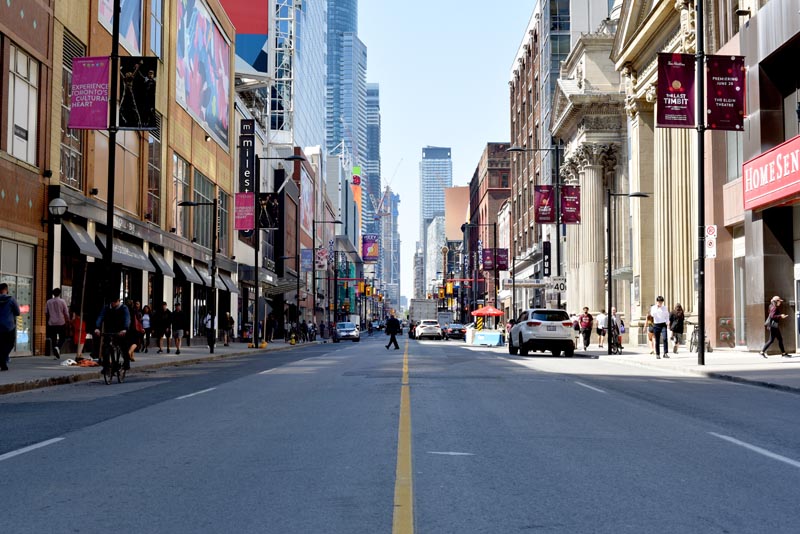
History of the Downtown Yonge Area
Blast to the Past
The Downtown Yonge area has gone through many rebirths over the centuries. Originally built as military supply routes, Yonge Street and Dundas Street quickly became the epicenter of Toronto. Keep reading to discover the rich history of this vibrant neighbourhood.
Bright Lights, Big City
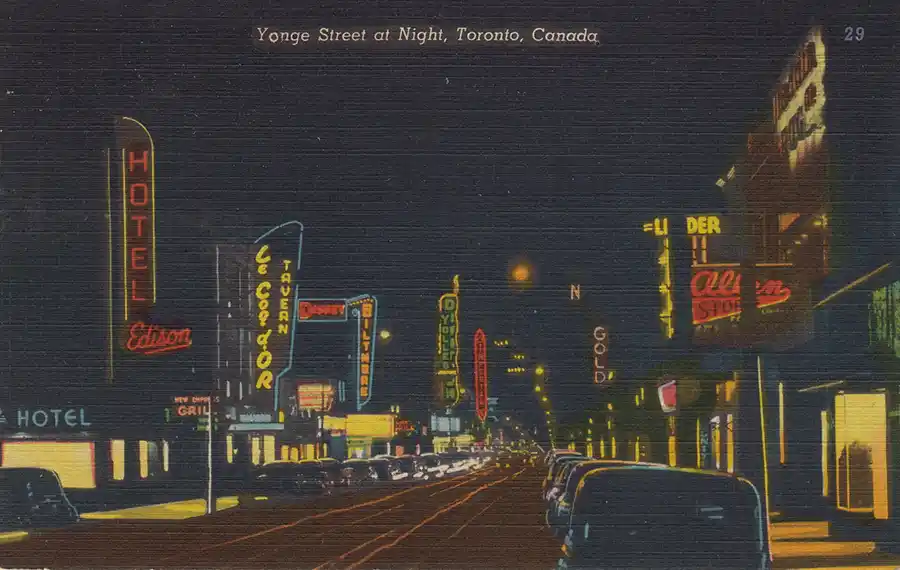
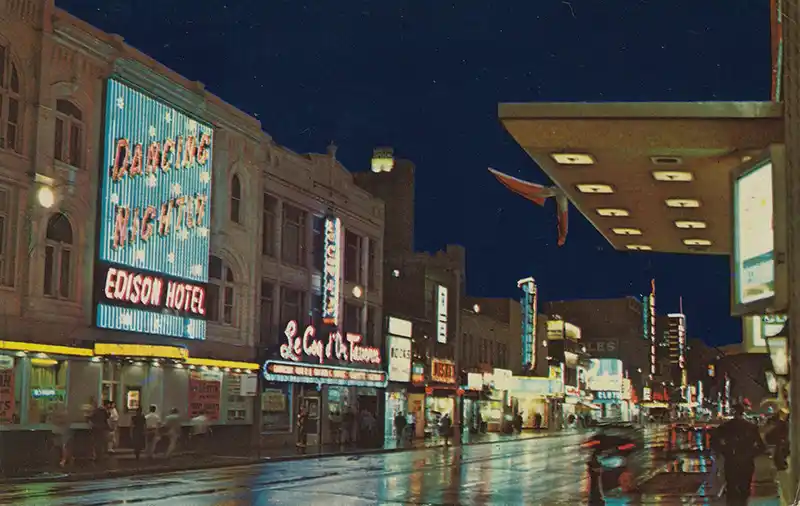
The 1960’s and 1970’s are characterized in Downtown Yonge by one word: Neon. Whether you’ve lived in Toronto for decades or are new to the city, signage plays a significant role in both the history and vitality of the neighbourhood, and neon signs were a huge part of that.
From music fans checking out the latest sounds at Sam the Record Man and A&A Books & Records or watching a live show at Massey Hall, to foodies grabbing a bite to eat at iconic mainstay Fran’s Restaurant, neon was a part of everyday life for every Torontonian who wandered down Yonge Street. To learn more about how we plan on preserving the neon history of Downtown Yonge, check out the Neon Sign Museum Toronto initiative.
The Shopping Mecca
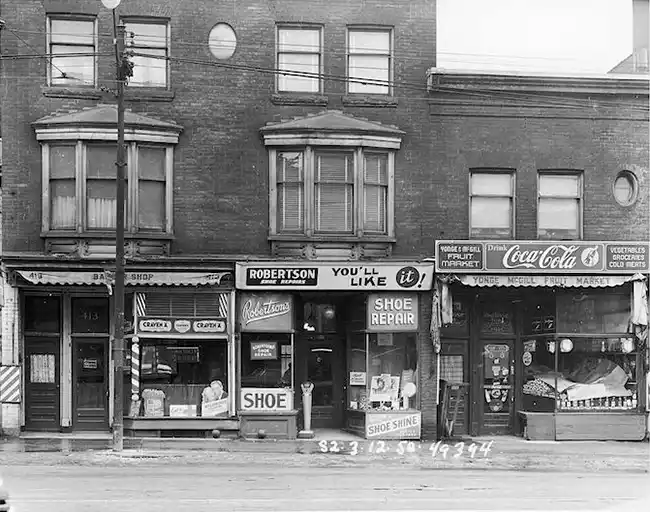
In the late 1800s Downtown Yonge quickly became a shoppers’ haven with the opening of the Eaton’s Queen Street, Eaton’s College Street and the Simpson’s department store. Through the following decades, the neighbourhood filled with local shopping destinations and staple small businesses that all Torontonians frequented.
By the 1970’s when the Eaton’s store was demolished to make way for the CF Toronto Eaton Centre, the Downtown Yonge neighbourhood had become a thriving shopping district, a tradition continued to this day, with over 130 clothing stores, all within a 15-minute walk from each other.
Music History of Yonge Street
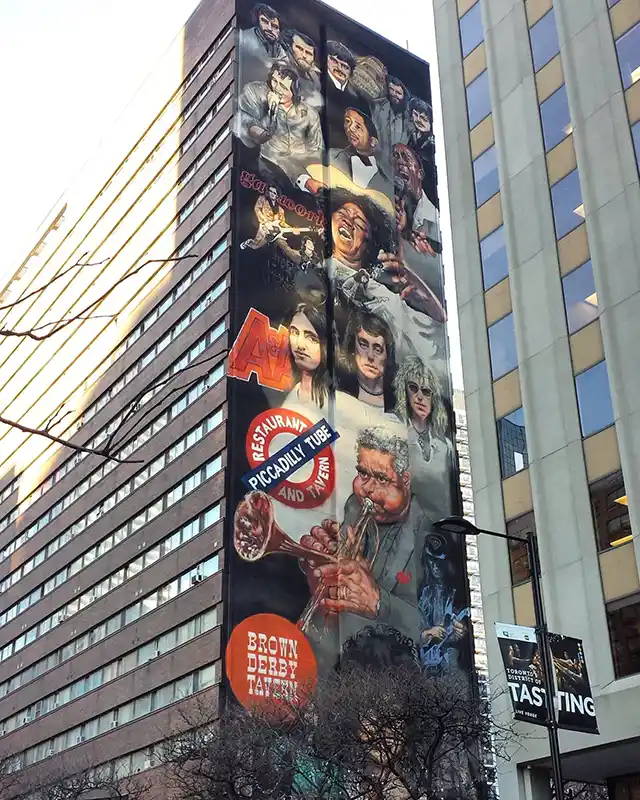
Live music has been part of the heart and soul of Downtown Yonge for decades. Dozens of bars and taverns lined Yonge Street in the 1950’s through to the 1970’s, where notable jazz musicians thrived such as Dizzy Gillespie, Oscar Peterson, and Muddy Waters.
Rock and folk music also flourished in these spaces, bringing Levon and the Hawks (The Band) together with Bob Dylan to create the hard-hitting sound of Dylan’s 1974 North American tour, as well as giving the legendary Gordon Lightfoot his start in the music industry. Keep exploring our website to learn more about the music history of Yonge Street, including the locations of our two 22-storey music murals.
Architectural Gems
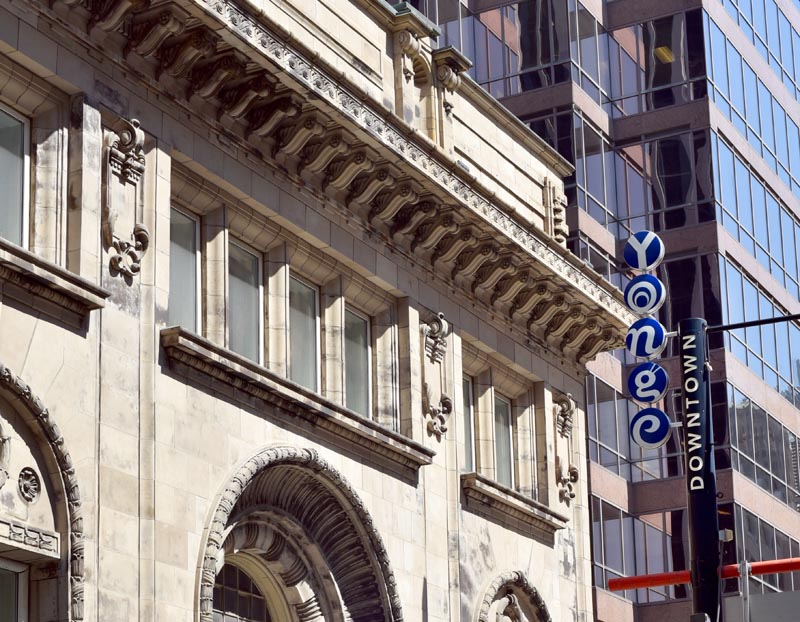
The 19th century gave rise to many architectural marvels that still stand today. From the Romanesque Revival buildings on Elm Street to the Richardsonian Romanesque style of Old City Hall, to the Carlu at College Park in the Art Moderne style, Downtown Yonge’s architectural history spans centuries.
Time Travelling in the Present
On your travels through the neighbourhood you may also stumble upon other architectural marvels such as the Toronto Hydro’s headquarters, opened in 1933; The Mattamy Athletic Centre (formerly known as Maple Leaf Gardens), home to the Toronto Maple Leafs until 1999; College Park, which was the home of the Eaton’s College Street store; and the Church of the Holy Trinity, which is the oldest building in the Downtown Yonge neighbourhood, dating back to 1847.